
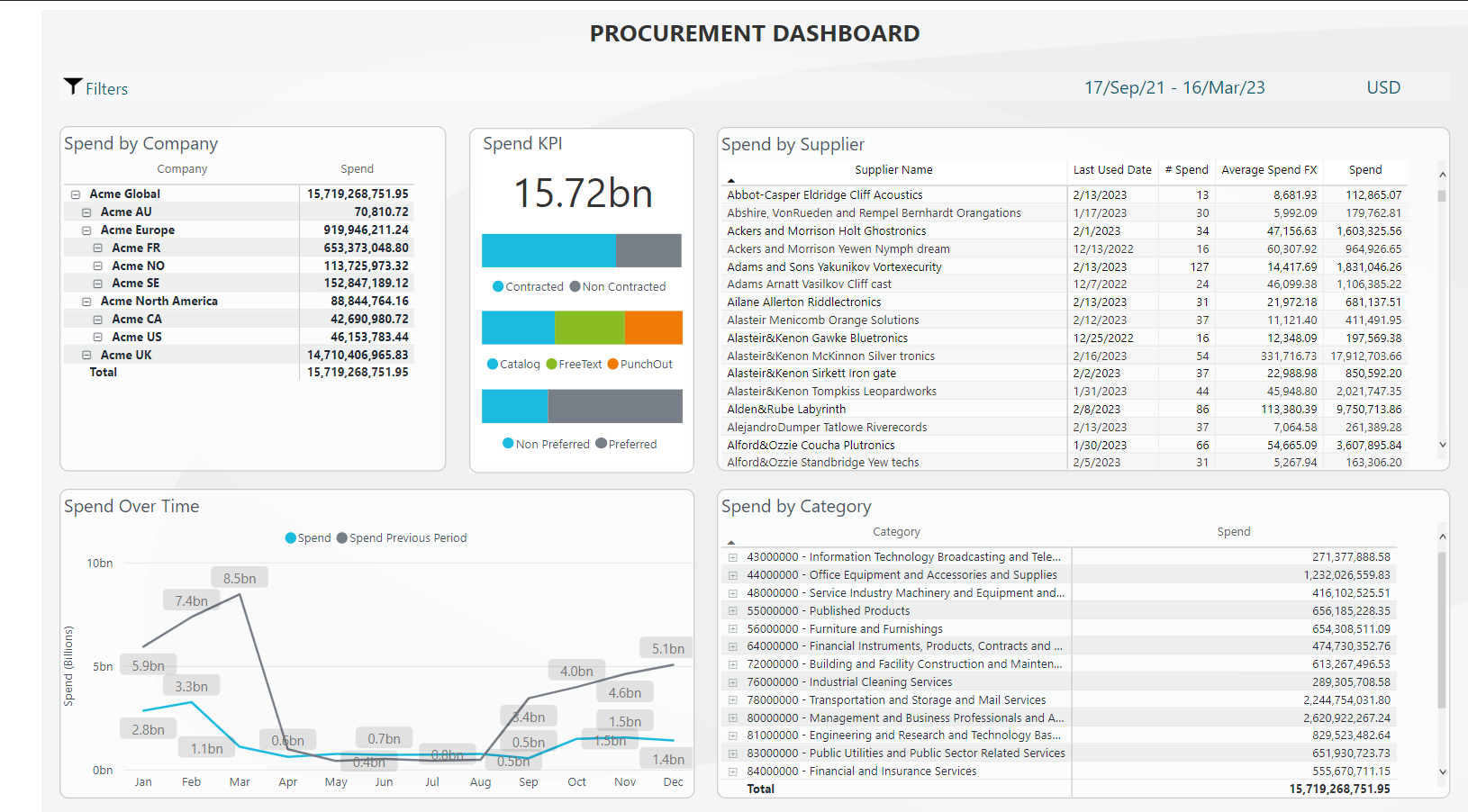
Spend visibility refers to an organization’s ability to track, analyze, and understand where money is being spent across suppliers, departments, and business entities. It provides finance and procurement teams with a clear view of purchasing activity so they can control costs, manage budgets, and make informed financial decisions.
In simple terms, spend visibility means knowing who is spending money, what it is being spent on, and when payments are occurring across the organization.
Spend visibility is often associated with procurement reporting, but in practice it relies heavily on accurate financial data from accounts payable processes such as invoice capture, approval workflows, and payment execution.
When spending data is fragmented across systems or delayed during invoice processing, organizations lose the ability to see a reliable picture of financial commitments.

Jump to the section that interests you below or for a deep dive, scroll down to read each one.
Why spend visibility matters
Spend visibility plays a central role in financial planning, operational efficiency, and cost management. Organizations that have clear insight into spending patterns are better positioned to control expenses and make strategic decisions.
Budget control
Finance teams rely on spend visibility to compare actual spending with approved budgets. When organizations can track expenditures across departments and projects, they can quickly identify overspending and adjust financial plans accordingly.
Supplier management
Understanding how much is being spent with each supplier helps procurement teams negotiate better pricing and consolidate vendor relationships. It also enables organizations to monitor supplier risk and performance.
Cost reduction opportunities
Spend data often reveals inefficiencies such as duplicate suppliers, fragmented purchasing, or maverick spending outside approved procurement processes. Greater visibility allows organizations to identify cost-saving opportunities and improve purchasing strategies.
Compliance and governance
Organizations must ensure purchases comply with internal procurement policies and regulatory requirements. Spend visibility provides transparency into purchasing behavior, making it easier to detect policy violations or unauthorized spending.
Without clear spend visibility, financial leaders may struggle to control costs or forecast spending accurately.
Common challenges that limit spend visibility
Despite the importance of spend visibility, many organizations struggle to maintain a complete view of financial activity.
Fragmented financial systems
Procurement platforms, ERP systems, accounts payable tools, and payment platforms may operate independently. When these systems are not integrated, spend data becomes fragmented and difficult to analyze.
Delayed invoice capture
Supplier invoices often arrive through multiple channels such as email, paper mail, or vendor portals. If invoices are not captured quickly and accurately, financial reporting may not reflect current spending activity.
Inconsistent coding and categorization
Invoices must be coded correctly to cost centers, departments, or spending categories. When coding standards vary across teams, spend reporting becomes unreliable.
Disconnected approval workflows
Invoice approvals sometimes occur through email or manual processes outside financial systems. This creates gaps in the audit trail and prevents finance teams from accurately tracking when financial commitments become liabilities.
These issues prevent organizations from obtaining a true real-time view of spending activity.
Examples of spend visibility
Spend visibility can be applied across multiple business functions.
Procurement analysis
Procurement teams use spend data to analyze purchasing patterns, identify high-value suppliers, and negotiate improved contracts.
Budget monitoring
Finance leaders track spending across departments to ensure budgets remain aligned with strategic priorities.
Cash flow forecasting
Accounts payable data helps treasury teams understand upcoming payment obligations and forecast cash outflows more accurately.
Compliance monitoring
Organizations can monitor spending behavior to detect purchases made outside approved supplier agreements or procurement processes.
When spend data is centralized and accessible, finance and procurement teams can collaborate more effectively to manage organizational spending.

The relationship between procurement, accounts payable, and spend visibility
Spend visibility is not created by procurement systems alone. It requires accurate data from across the purchase-to-pay lifecycle.
Procurement platforms capture purchasing commitments through purchase orders and supplier contracts. However, the true financial obligation is often confirmed only when invoices are received and processed through accounts payable.
Accounts payable workflows validate invoices, ensure approvals occur according to company policy, and record the liability within the ERP system. Payment execution then completes the financial transaction.
If any stage of this process is disconnected or delayed, spending data becomes incomplete. Reliable spend visibility therefore depends on strong coordination between procurement, accounts payable, and finance systems.
How technology improves spend visibility
Modern financial platforms improve spend visibility by connecting procurement, invoice processing,
and payment data into a unified environment.
Technology can support spend visibility through several capabilities:

Automated invoice capture
Automated capture tools ensure supplier invoices are entered into financial systems quickly and accurately.

Standardized approval workflows
Digital approval workflows ensure invoices follow defined policies and create clear audit trails.

Integrated financial systems
Integration between procurement tools, ERP platforms, and AP automation systems ensures financial data flows consistently across the organization.

Real-time analytics and reporting
Advanced analytics dashboards allow finance leaders to monitor spending trends across suppliers, departments, and regions in real time.
Together, these capabilities provide finance teams with the transparency needed to manage spending effectively.

Modern trends in spend visibility and financial automation
As organizations adopt digital finance tools, spend visibility is becoming more sophisticated.
Artificial intelligence and advanced analytics are enabling finance teams to detect unusual spending patterns, identify supplier risks, and forecast financial commitments more accurately.
Cloud-based financial platforms also allow organizations to consolidate data from multiple entities, currencies, and regions into a unified reporting environment.
These technologies allow finance leaders to move beyond basic spend reporting toward proactive financial management.
FAQs about spend visibility
Spend visibility refers to an organization’s ability to track and analyze spending across suppliers, departments, and business entities.
Spend visibility helps finance leaders monitor budgets, control costs, manage supplier relationships, and forecast cash flow more accurately.
Poor spend visibility often results from fragmented systems, delayed invoice processing, inconsistent coding practices, and manual approval workflows.
Accounts payable processes supplier invoices and records financial liabilities. Accurate invoice capture and approval workflows ensure spending data is reliable and visible.
Automation centralizes invoice processing, approval workflows, and reporting, allowing organizations to monitor spending in real time across the entire purchase-to-pay process.