What CFOs overlook when scaling AP in multi-entity environments
- Introduction
- The hidden costs of fragmented AP operations
- Inconsistent approval workflows and policy gaps
- Standardizing AP for scale and control
- Entity-aware workflows without the complexity
- Centralized controls and real-time oversight
- Seamless ERP integration for diverse environments
- What CFOs should look for in an AP automation platform for scale
- Scale AP with confidence and control
- Frequently asked questions
Hear what's covered in this article:
As organizations expand into new markets, business units, and legal entities, finance leaders face growing complexity in managing accounts payable (AP). While growth brings opportunity, it also exposes critical gaps in visibility, control, and process standardization that can lead to real financial and compliance risks.
For CFOs tasked with ensuring scalable, efficient operations, the way AP is handled across entities is often an overlooked source of friction. Disconnected systems, inconsistent approval paths, and region-specific tax rules can quickly become barriers to growth if not addressed proactively.
Modern AP automation offers a strategic advantage. When designed to support multi-entity environments, it centralizes oversight, standardizes workflows, and delivers AI-powered insights that help CFOs expand operations without sacrificing control.
Inconsistent approval workflows and policy gaps
Approval workflows are another blind spot. In a multi-entity setup, it's common for each region to build its own logic around who approves what, when, and how. These variations often evolve over time through manual workarounds or local preferences, leading to approval chains that are undocumented, inefficient, or non-compliant.
This inconsistency not only slows down invoice processing but also makes internal audits more difficult. If there’s no clear policy or audit trail for why an invoice was approved, or who signed off on a payment, finance teams may find themselves scrambling to justify transactions after the fact.
Standardizing AP for scale and control
The first step to solving these challenges is to rethink how AP is managed at the system level. A scalable AP automation platform gives CFOs the tools to standardize workflows, enforce policies, and maintain visibility, no matter how many business units or countries the organization operates in.
With Medius, invoice automation becomes the backbone of a unified AP process. Invoices are captured, matched, routed, and approved through a central platform that supports entity-aware rules. This means that each legal entity can maintain its own tax codes, currencies, and approval hierarchies, while still following a standardized workflow that provides audit-ready visibility across the entire organization.
Why standardized AP matters more as you scale
As AP scales across entities, consistency becomes critical for compliance and audit readiness. This toolkit shows how modern finance leaders embed risk controls directly into standardized AP workflows, reducing exposure without slowing the business.

Entity-aware workflows without the complexity
One of the biggest challenges in multi-entity finance is supporting local variations without creating chaos. Medius solves this by allowing finance teams to configure workflows by entity, cost center, or geography, without relying on custom code or manual exceptions.
For example, AP approvals in a European subsidiary can follow specific VAT rules and spending thresholds, while a North American business unit can operate with a different set of tax and currency requirements. The key is that both are handled through the same platform, with consistent logic and reporting structures behind the scenes.
This approach simplifies compliance across jurisdictions, reduces the need for local manual intervention, and speeds up invoice processing by ensuring that invoices are only escalated when necessary.
Centralized controls and real-time oversight
With all AP activity flowing through a single system, finance leaders finally gain the real-time oversight they need to manage spend, forecast cash flow, and identify issues early. Dashboards provide visibility into invoice status, aging, exception trends, and approval bottlenecks, broken down by entity or rolled up to the group level.

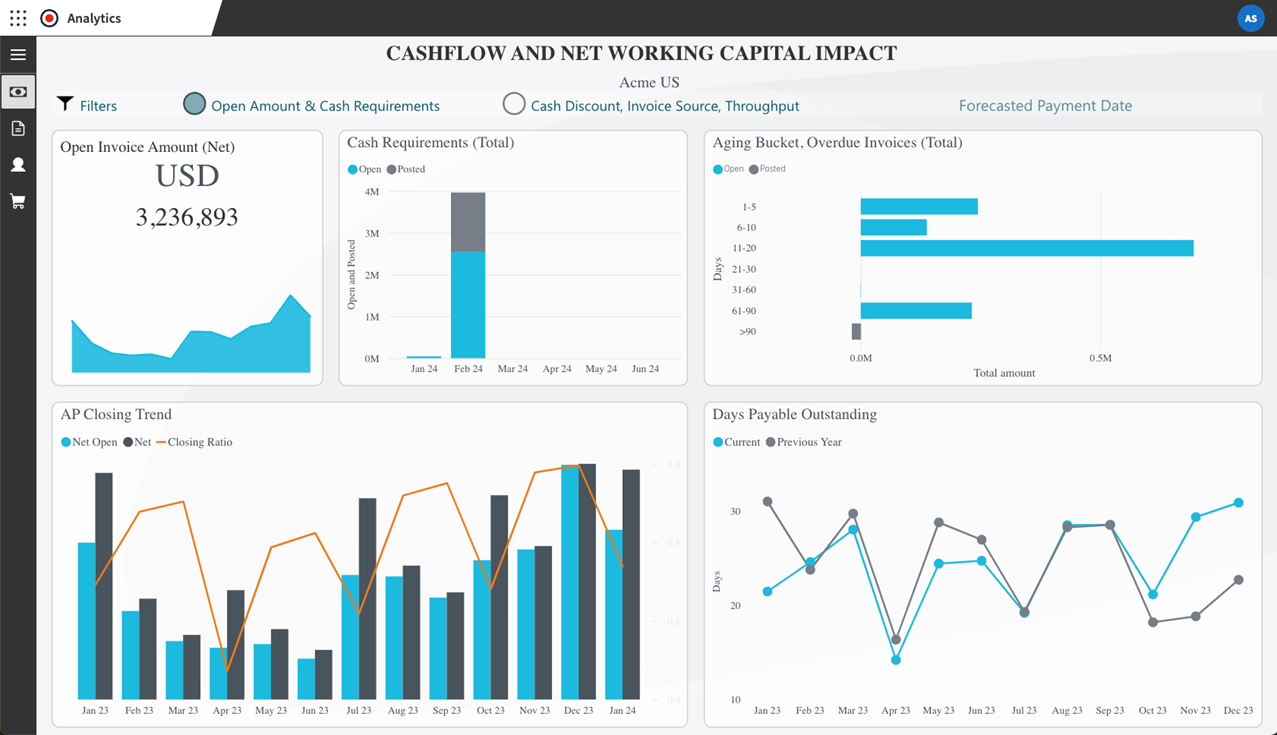
This is where analytics becomes a true differentiator. Medius provides insight into not just what’s happening in AP, but why. Which suppliers are consistently triggering exceptions? Which business units are lagging behind in approvals? Where are opportunities to consolidate vendors or negotiate better terms?
With centralized analytics and audit trails, CFOs can shift from reactive troubleshooting to proactive spend management, making smarter decisions based on reliable data.
Seamless ERP integration for diverse environments
Another common challenge in multi-entity AP is integrating with a patchwork of ERP systems. Large organizations often run multiple ERPs across their global operations, making it difficult to connect AP workflows and reporting.
Medius is built to work across diverse ERP environments, with standardized connectors and flexible data flows. This allows finance teams to centralize AP without forcing an ERP consolidation, reducing the burden on IT and accelerating deployment.
Each invoice processed through Medius is posted back to the correct ERP with full accounting details, approvals, and audit logs intact. This ensures clean handoffs between systems, accurate reporting, and less risk of reconciliation errors.
What CFOs should look for in an AP automation platform for scale
As your organization grows, your AP processes need to scale with it.
Here are the key capabilities finance leaders should prioritize:
Entity-aware workflows that support local tax, currency, and approval requirements
Centralized controls and real-time dashboards across all business units
Configurable approval policies and automated routing without custom coding
Integrated analytics that highlight trends, exceptions, and savings opportunities
Seamless ERP integration across multiple environments and regions
Compliance features that support global tax regulations and audit readiness
Medius offers all of this in a modern cloud platform built specifically for the complexities of global finance teams.
AP software built for multi-entity complexity
Not every AP solution is built for multi-entity complexity. This enterprise buyer’s guide outlines the capabilities CFOs should prioritize to support growth, maintain visibility, and avoid re-platforming as the organization scales.

Scale AP with confidence and control
Expanding into new regions or entities doesn’t have to mean losing control of accounts payable. With Medius, CFOs gain the tools to scale with confidence, unifying invoice automation, enforcing compliance, and delivering real-time analytics that support smarter, faster financial decisions.
If your organization is growing and your AP processes are struggling to keep up, now is the time to standardize for scale. Explore how Medius helps multi-entity finance teams simplify complexity and stay ahead.
Frequently asked questions
Using a centralized AP automation platform like Medius gives CFOs a single view of all invoice activity. Real-time dashboards track approvals, exceptions, and spend across every entity, helping finance leaders maintain oversight without manual data consolidation.
Standardized workflows reduce audit risk, prevent policy violations, and ensure consistent approval processes. Medius allows each entity to follow localized tax and currency rules while staying aligned with global controls.
Disparate systems can lead to delayed payments, inconsistent compliance, limited visibility, and increased audit findings. Without centralized controls, finance teams may struggle to enforce policies and track liabilities across entities.
Medius supports seamless integration with multiple ERP platforms through standardized connectors. This allows each entity to maintain its ERP while still managing AP through one unified solution.
Medius provides analytics that highlight invoice trends, exception causes, approval delays, and supplier behavior. These insights help CFOs improve forecasting, optimize workflows, and support smarter financial decisions.


