
Contract management is the process of managing agreements, from their creation to their execution by the chosen party and the eventual termination of the contract.
Key activities involve performance analysis against the contract terms to maximize operational and financial performance and to identify and mitigate financial and reputational risk through non-compliance with contract terms.
In modern organizations, contract management also plays an important role in ensuring that negotiated terms are enforced across downstream processes, including procurement and accounts payable.

Why is contract management important?
According to World Commerce & Contracting, 90% of business people need help understanding contracts1.
Contract management is an important task for a business team. A solution to streamline contract writing, processing, and storage allows businesses to meet legal and regulatory requirements with ease.
It minimizes risk, protects both companies' interests, and can be a good resource in decision-making and resolving disputes.
Having well-documented contracts that are executed quickly reduces costs and streamlines the contract process while promoting positive vendor relationships.
Software solutions can automate certain actions in the management process, saving a company time and money.
As organizations scale and manage higher volumes of supplier agreements, software-based contract management becomes increasingly important for maintaining consistency, visibility, and financial control across the business.
1 World Commerce & Contracting, 2021, Overcoming the 10 Pitfalls of Contracting: How AI Can Transform the Value of Contracts.
What is a Contract Lifecycle Management (CLM) process?
Contract Lifecycle Management (CLM) refers to the structured process used to manage contracts throughout their entire lifecycle, from initiation through ongoing management and renewal.
This step involves identifying the need for a contract between two parties. In this discovery phase, the scope of the agreement is established.
In regulated or multi-entity environments, early clarity reduces downstream compliance issues and pricing disputes.
The contract is drafted based on the terms and conditions defined by each business involved in the agreement.
Standardized templates and clause libraries help ensure consistency, reduce legal review cycles, and embed approved language across agreements.
With an initial draft version in place, each party must examine the details of the contract. This stage of the contract lifecycle will often involve internal collaboration with various departments.
Business operations, accounts payable, and legal may need to confirm that the agreement is sound separately.
Modern CLM tools automate workflows so contracts move efficiently through review without relying on email or manual tracking.
After a thorough review, one or both parties may need to make edits to the contract. All differences must be addressed before a final document can be approved.
This stage in the lifecycle process of a contract can be where things slow down. Large companies with multiple stakeholders with varying access and authority can make the approval process complex.
Automated approval workflows help reduce bottlenecks and improve visibility into contract status.
After both parties approve the final contract, it is signed to put it into effect. Increasingly, these signatures are electronic through a service like DocuSign.
Contracts are monitored for performance and to ensure both parties are meeting obligations. This information is valuable when it is time to consider contract renewal or amendment.
This is where the most value is gained or lost. Active monitoring ensures pricing, volume commitments, service levels, and renewal terms are enforced throughout the contract’s life.
When contract management is connected to accounts payable processes, organizations can validate supplier invoices against contract terms automatically, preventing overpayments and off-contract spend.
What are the benefits of
contract management software?
How contract management works
Managing service delivery
This ensures that products are delivered as and when they are ordered.
Managing the relationship
It involves strengthening the contact between vendor and purchaser to improve communication throughout the contract management process.
Managing the contract
The ongoing administration that ensures the day-to-day procurement activities follow what is detailed in the agreement.
Seeking improvements
Amendments and alterations are pursued within a procurement environment to improve efficiencies and increase profits.
Ongoing assessment
Procurement activities are assessed continuously to ensure that contracts are honored and that all purchasing processes have been followed.
Managing change
As part of a long-term procurement relationship, the changes in activities, requirements, or products must be noted and handled effectively.
Managing renewal or termination
When a contract is due for renewal, contract management allows for taking proactive steps to understand whether the contract should be renewed as is, re-negotiated, or terminated based on future business needs, commercial attractiveness, and previous performance by the supplier.

See Medius Contract Management in action!
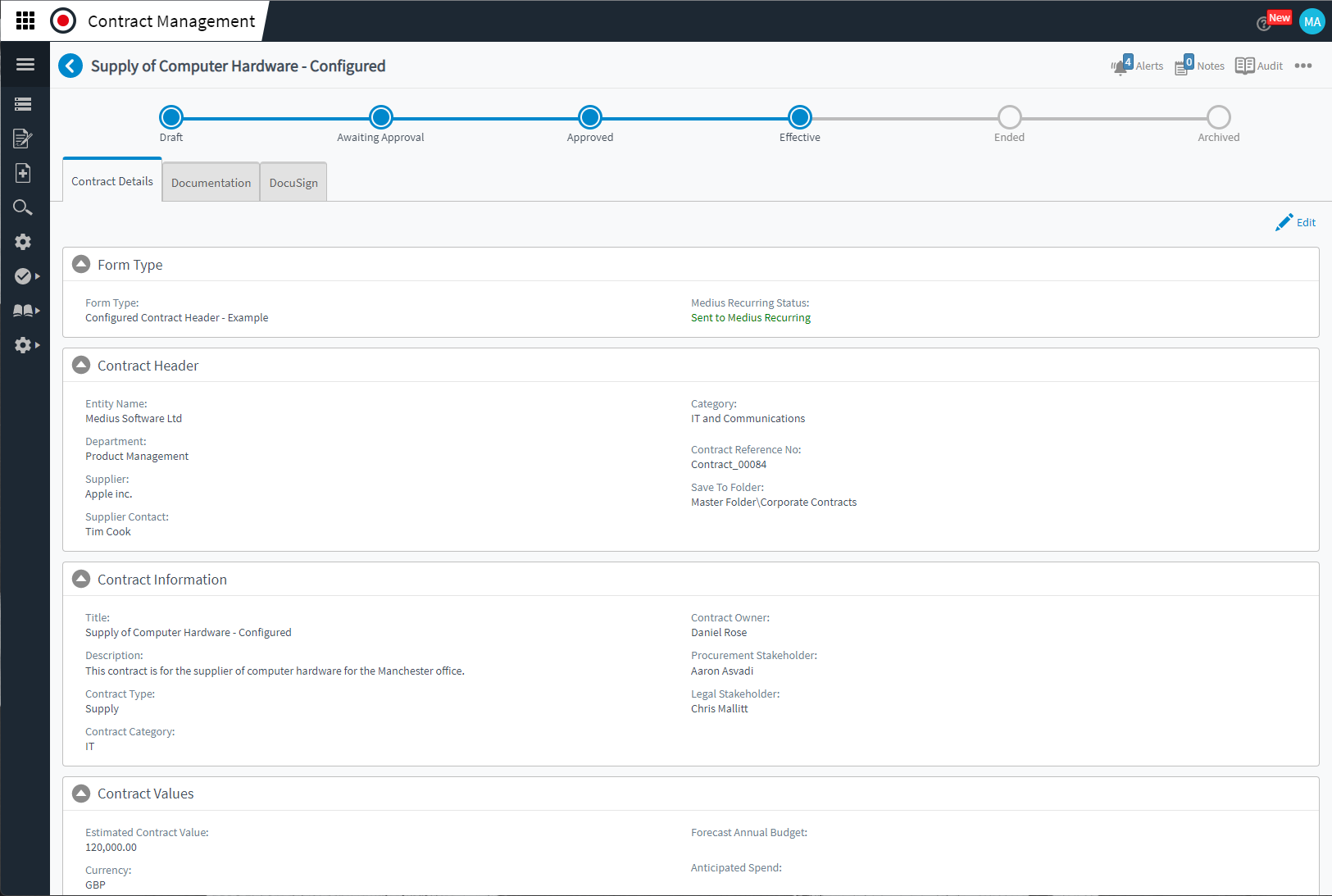
Take control and reduce contract risk by managing all your agreements in a single, secure cloud based repository. With Medius Contract Management you can create and manage multiple contract types, delivering efficiency, visibility and risk control.

Integrating contracts with AP automation
Contract management becomes significantly more powerful when integrated with accounts payable automation.
This connection allows organizations to validate invoices against contract pricing and terms before payment is issued, reducing manual review and financial risk.
By linking contracts directly to invoice processing, organizations can:
- Reduce invoice exceptions and overpayments
- Enforce negotiated pricing automatically
- Create a complete audit trail connecting contracts, invoices, and payments
- Strengthen compliance without adding operational complexity
Challenges of non-automated contract management
Organizations that rely on manual contract processes often face limited visibility into active agreements, inefficient workflows, and increased risk of human error.
Unintended auto-renewals, missed compliance obligations, and delayed renegotiations can all result from non-automated processes. Manual renewals and revisions are labor-intensive and often lack the data needed to support informed decisions.
Centralized, cloud-based contract management helps address these challenges by standardizing processes and improving collaboration across teams.
Lack of visibility
Not being able to see the details of every active contract leads to unintended auto-renewals at unfavorable terms.
It can also lead to poor performance where one or both parties must comply with regulations or contract terms.
Inefficient processes
Business processes that lack automation create an environment where manual intervention is required to push the process forward through each step.
The contract lifecycle process tends only to stall if diligence is maintained. An automated system is a second security level to back up busy contract professionals.
Human error
Human errors due to data entry mistakes or misplaced documents are minimized when a centralized, cloud-based system is used to maintain contracts.
Manual contract renewal and revisions
The manual renewal and renegotiation of contracts can be labor-heavy. A digitized system prevents timely reminders to review terms and allows renegotiation to remain unhurried and based on actionable data like contract performance.
Limited communication
Contract partners may tend to limit communication over the lifecycle of a contract. The regular reminders and task completion assignments that a contract management software solution provides will encourage open communication between parties.
This could limit contract disputes and misunderstandings. Better supplier relationships will result.
Get visibility and control of all your contracts with Medius Contract Management.
Contract management best practices
Standardize contract creation
Use a set of terms, conditions, and legal language that applies to many contracts.
Standardization reduces legal review cycles, improves consistency across agreements, and makes it easier to enforce contract terms downstream in procurement and accounts payable.
Set contract management KPIs
Make your goals transparent to the entire business.
Common KPIs include contract cycle time, renewal lead time, compliance rates, and the percentage of invoices aligned with contract pricing. These metrics help teams measure both efficiency and financial impact.
Track contract approval time
This allows an organization the advantage of:
- Receiving contracted goods and services sooner
- Ensuring a quicker move toward a positive relationship
- Creating an easier process for seizing later opportunities
Tracking approval times also helps identify bottlenecks that delay execution and increase risk, particularly in large organizations with multiple stakeholders.
Set automated reminders
Alert essential parties to review the document. This eliminates the risk of missing certain addresses in group emails.
Automated alerts ensure reviews, renewals, and compliance checks happen on time, reducing the risk of unintended auto-renewals or missed obligations.
Review financial metrics
Dedicate part of the business’ regular contract management reviews to analyzing financial metrics.
Financial reviews should include spend against contract, pricing variance, and invoice compliance to ensure negotiated terms are being enforced in practice, not just documented.
Conduct regular compliance reviews
This responsibility is necessary to protect the company against the risk of legal, industry, and external regulations.
When contract management is connected to AP automation, compliance reviews become more efficient by leveraging invoice data and audit trails to validate adherence automatically.
Frequently asked questions about contract management
Contract management automation is moving away from manual methods of creating, processing, and monitoring a company’s partner agreements.
Through automation techniques, contracts can be standardized and digitized for every step of the lifecycle – from initial creation to execution.
Each step in the process that is automated shortens the cycle time for contract execution and increases your return on investment.
The contract management automation software implementation process follows a logical progression.
User access is audited and implemented so that only the staff that need access to sensitive and confidential documents are allowed access.
After initial configuration, contracts can be created and imported using intuitive capture technology. Pre-set templates for contract creation can be set up so that a contract can be created with the click of a button.
Contract professionals develop rules for automated alerts to notify them of impending contract work that needs to be performed.
Reports and key performance measures are also identified so that the health of every contract can be monitored closely.
Yes, it can. The contract management solution from Medius features rich integration with common ERPs.
With intelligent, pre-packaged connections and REST APIs, all your data repositories can speak to each other.
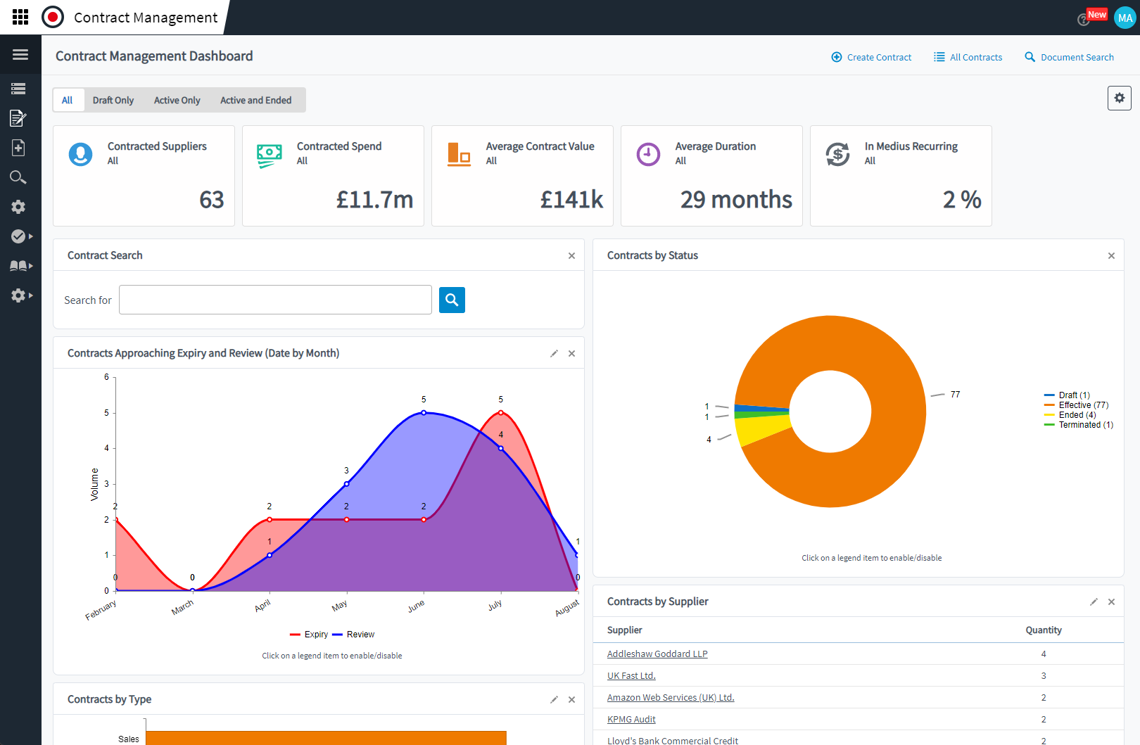
Contract Management from Medius can also operate as an independent system to get you up and running in weeks. The standalone solution features interactive summaries, reports, and full visibility into your contracts' lifecycle.
Yes, contract management software is security-rich. Access to the cloud-based portal is password-protected to prevent unauthorized access to sensitive business documents.
Control user access with role-based permissions, providing granularity to access and keeping you working safely.
Contract management helps prevent overpayments by ensuring supplier pricing, payment terms, and obligations are clearly documented and enforced. When integrated with accounts payable automation, invoices can be validated against contract terms automatically before payment is issued.
AI enhances contract management by helping organizations extract key terms, identify risk, flag anomalies, and surface insights across large contract volumes. AI-driven tools can also support compliance monitoring and highlight contracts that require review based on usage, spend, or renewal risk.
Yes. Contract management software creates a centralized, searchable repository of agreements with full version history and approval records. When connected to AP automation, it provides a complete audit trail linking contracts, invoices, and payments, significantly reducing audit preparation time.
Clear, well-managed contracts improve supplier relationships by setting transparent expectations around pricing, delivery, and obligations. Automated reminders, performance tracking, and consistent enforcement reduce disputes and support more productive, data-driven conversations with suppliers.
Contract management software can support a wide range of agreements, including supplier contracts, service agreements, lease agreements, NDAs, and procurement contracts. Centralizing all contract types improves visibility and governance across the organization.
Contract management serves as a foundation for procurement and AP processes by providing the contractual context needed to enforce pricing, payment terms, and obligations. When integrated, contracts inform purchasing decisions and ensure invoices align with negotiated terms.