How global food & beverage companies achieve compliance with AP automation
- Introduction
- Turning complexity into control
- Keeping pace with e-invoicing and VAT mandates
- Reducing risk and improving governance
- Making audit readiness the default
- Standardizing compliance across global operations
- What to look for in an AP automation platform
- Medius is a smarter approach to global AP compliance
- Frequently asked questions
Hear what's covered in this article:
For global food and beverage companies, maintaining compliance is a daily challenge. Between evolving VAT rules, regional e-invoicing mandates, and complex supplier networks, finance teams are under constant pressure to manage risk while ensuring payments flow smoothly. And when invoice approval workflows are fragmented across plants, warehouses, and markets, even small errors can create big disruptions.
Managing all of this manually or with disconnected tools often leads to delays, duplicate work, or non-compliant transactions. The key to staying ahead lies in embedding compliance directly into the accounts payable process through automation. With Medius, organizations gain a centralized way to manage tax requirements, supplier risk, and audit readiness without disrupting ERP workflows or adding manual overhead.
Turning complexity into control
Most food and beverage enterprises run on established ERP systems like SAP, which handle procurement and financial data across global entities. These systems are foundational, but they aren’t always built to accommodate region-specific compliance requirements or fast-changing tax rules.
Medius helps fill this gap by integrating directly with your ERP and applying automation where it matters most. Instead of routing approvals or validating tax codes manually, teams can set up standardized workflows that apply the right rules automatically based on invoice type, entity, location, or value.
This allows finance teams to manage AP in a consistent way across all business units, while still honoring local compliance requirements. Approval steps, tax validation, and documentation policies are embedded from the start, not layered on after the fact.
Modern risk demands modern controls
Food and beverage companies are no stranger to handling compliance hurdles. Learn how automation helps finance teams reduce exposure while improving efficiency in the modern finance leader’s risk and controls toolkit.

Keeping pace with e-invoicing and VAT mandates
Across regions, governments are rapidly evolving digital tax and e-invoicing protocols. Some require invoices to be validated before they’re sent for payment. Others mandate specific XML formats or include real-time reporting to tax authorities. These differences add complexity for any organization operating across borders.
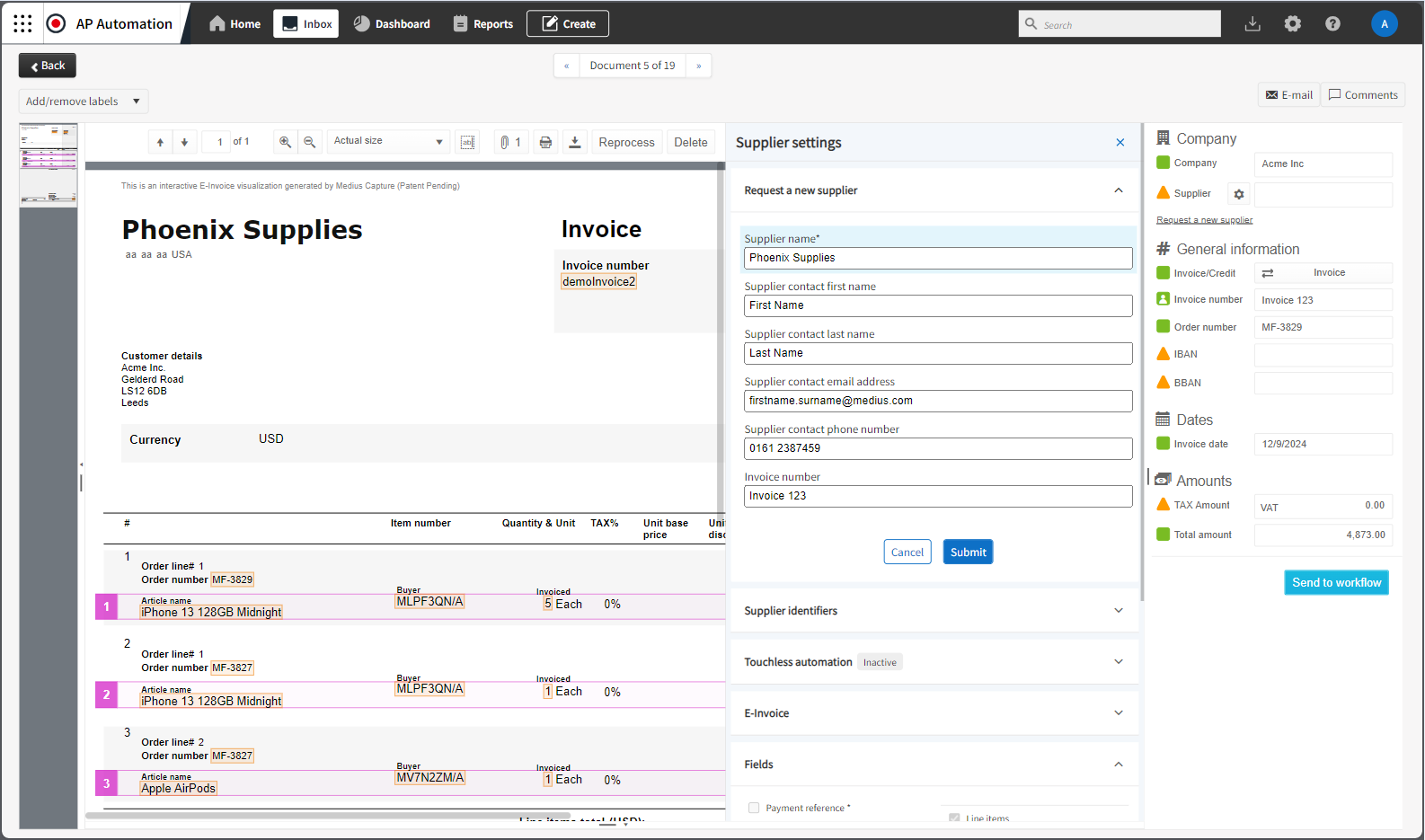
With Medius, country-specific requirements are already built into the AP process. Each invoice is automatically checked for correct formatting, tax codes, and required fields before submission. If something’s missing or non-compliant, the system flags it instantly, no need for manual reviews or post-processing rework.
This also supports smoother supplier onboarding. Vendors submit invoices in the formats that make sense to them, and Medius handles the translation behind the scenes. Finance teams stay confident that every invoice meets local standards without slowing down payments.

Reducing risk and improving governance
Invoice fraud, incorrect payments, and unauthorized vendors are real concerns for large organizations, especially when supplier networks span multiple regions. It’s easy for an error or exception to slip through when processes rely on spreadsheets or disconnected tools.
Medius helps prevent these issues by digitizing the full invoice lifecycle and applying AI innovation to flag unusual activity. If an invoice amount seems off, or vendor details change unexpectedly, the system raises an alert. Every transaction is tracked from submission to approval to payment, with a full digital trail that simplifies auditing and improves internal controls.
Teams can also apply spend thresholds, policy rules, and approval routing by department or entity, so only the right people sign off on sensitive transactions. This structure strengthens governance without slowing down the business.
Making audit readiness the default
In many organizations, audit readiness still means gathering records reactively by pulling documents from different systems, verifying approvals, and explaining exceptions. It’s time-consuming and often reveals inconsistencies that could have been avoided with more centralized oversight.
With Medius, every invoice has a traceable path. Approvals, comments, timestamps, and supporting documents are all captured automatically, with no need for manual intervention. This creates a consistent audit trail that can be accessed instantly.
Finance teams don’t need to chase down approvers or dig through shared drives. Instead, they have confidence that their systems are already aligned with audit requirements, and their processes are working as designed.
Standardizing compliance across global operations
Staying compliant at scale requires more than just local know-how. It takes a system that can manage multiple tax jurisdictions, approval flows, and supplier relationships without losing consistency.
Medius enables that by centralizing policy controls and automating the checks that ensure every invoice meets internal and external requirements. Teams no longer need to track local mandates manually or worry about country-specific variations in workflow.
With built-in analytics, they can also monitor exceptions, track trends, and identify risks early, turning compliance from a bottleneck into a business enabler.
What to look for in an AP automation platform
To support global compliance at scale, finance teams need more than invoice capture. The right AP automation platform should offer tools that help standardize workflows, reduce fraud risk, and stay audit-ready without adding manual effort.
Here are five key features to consider:
Automated tax and invoice validation
The platform should apply country-specific rules automatically. This includes checking formatting, tax codes, and required fields before an invoice enters the approval flow.
Supplier onboarding and verification
New vendors should go through a controlled onboarding process. This reduces the chance of fraud and ensures only trusted suppliers are approved for payment.
Configurable approval workflows
Role-based controls help route invoices based on business unit, region, or value. This keeps approvals consistent and aligned with internal policies.
Real-time analytics and exception tracking
Built-in analytics help finance teams spot issues early. Tracking exceptions over time also supports continuous process improvement.
Audit-ready documentation
Every action in the invoice lifecycle should be tracked. Approvals, comments, and edits are logged automatically, making audit prep fast and reliable.
Medius brings all of these capabilities together in a single solution. With compliance built into every step of the process, finance teams gain the control they need to operate globally with confidence.
How Bolletje strengthened financial control

Compliance in food and beverage demands visibility, accuracy, and consistency across every transaction. See how Bolletje improved oversight, streamlined processes, and gained greater control over spend with modern automation.
Medius is a smarter approach to global AP compliance
Food and beverage companies face unique challenges when it comes to compliance. From rapidly changing tax mandates to diverse supplier ecosystems, the need for control and agility has never been greater.
AP automation helps meet this challenge by embedding governance into every transaction. With Medius, finance leaders gain a streamlined way to manage e-invoicing standards, reduce fraud exposure, and stay audit-ready without disrupting existing ERP workflows or slowing down operations.

Explore how Medius supports stronger compliance in global accounts payable. Book a demo today to see how automation makes it easier to manage risk, scale with confidence, and maintain full visibility across all entities.
Frequently asked questions
They use AP automation platforms that apply country-specific validation to every invoice. This ensures each document meets local tax requirements before approval or submission, reducing errors and keeping payments on track.
Centralizing invoice workflows and compliance policies within a single AP automation platform helps standardize processes. Integrated tools let finance teams enforce consistent rules without relying on separate systems at each site.
Manual processes often leave gaps in documentation. AP automation captures every step of the invoice journey from submission to approval to payment, creating a complete and traceable audit trail that simplifies preparation.
Yes. Leading platforms use built-in controls to verify supplier data, enforce approval rules, and flag unusual activity. This helps detect and prevent duplicate payments, unauthorized vendors, or irregular invoice patterns.
They should prioritize tools that offer ERP integration, tax rule automation, supplier onboarding controls, analytics, and audit tracking. These features help manage risk while keeping operations scalable and efficient.


