How AI agents are expanding from AP automation into source-to-pay
- Introduction
- Why AP automation became the foundation for broader S2P intelligence
- Why AI agents are expanding beyond invoice processing
- Why procurement workflow orchestration is becoming more important
- Why fraud prevention is becoming part of AI driven S2P operations
- Why AI differentiation in S2P depends on operational depth
- How Medius is expanding AI across the source-to-pay lifecycle
- FAQs
Hear what's covered in this article:
AI capabilities are becoming increasingly embedded across enterprise finance and procurement operations. What began primarily as automation focused on invoice processing and approval routing is now expanding into broader source-to-pay environments that involve supplier onboarding, payments, procurement coordination, contract workflows, and fraud prevention.
As organizations continue modernizing spend management operations, AI agents are beginning to support more connected workflow execution across the full source-to-pay lifecycle.
This shift is changing how enterprises evaluate automation maturity.
AI in source-to-pay is no longer limited to isolated task automation or conversational assistance. Organizations are increasingly exploring how intelligent systems can coordinate operational workflows, support transaction management, surface operational risks, and improve responsiveness across interconnected finance and procurement environments.
The expansion of AI agents across S2P operations is being driven largely by the operational foundation established through AP automation.
Why AP automation became the foundation for broader S2P intelligence
Accounts payable environments generate large volumes of operational finance data tied to invoices, approvals, suppliers, payment timing, purchasing activity, and transaction history.
Because AP operations sit at the intersection of procurement, finance, suppliers, and payments, they create a strong operational starting point for broader workflow intelligence across source-to-pay environments.
Modern AP automation platforms already coordinate invoice validation, approval routing, ERP synchronization, exception handling, payment workflows, and supplier interactions across enterprise systems. As organizations standardize these workflows, they create more structured operational environments capable of supporting more advanced AI driven coordination.

This is one reason AP automation has become such an important foundation for broader S2P evolution.
Organizations cannot effectively support intelligent workflow execution across procurement and finance operations without consistent operational processes and trusted transaction data underneath them.
Why AI agents are expanding beyond invoice processing
Early AP automation initiatives focused heavily on reducing manual invoice processing work. AI agents are now expanding into broader operational coordination across source-to-pay workflows.
Supplier onboarding is one example.
AI systems can help identify missing onboarding information, surface validation issues, coordinate documentation workflows, and support supplier communication throughout onboarding processes.
Payments represent another growing operational area for AI driven coordination. Intelligent systems can help identify payment anomalies, monitor transaction patterns, surface fraud risks, and support payment timing analysis across finance environments.
Contract management workflows are also becoming more connected to operational finance intelligence. AI systems can help organizations identify contract discrepancies, surface renewal timing issues, and improve visibility into how procurement activity aligns with supplier agreements and invoice activity.
As these operational areas become increasingly connected, AI agents are evolving from isolated AP tools into broader workflow coordination systems across the spend lifecycle.
Why procurement workflow orchestration is becoming more important
Enterprise source-to-pay operations involve continuous coordination between procurement teams, finance departments, suppliers, contracts, payments, and compliance functions.
Disconnected systems create operational delays, fragmented visibility, and inconsistent workflow execution across these environments.
AI agents are increasingly being used to support procurement workflow orchestration by helping organizations coordinate approvals, monitor operational activity, surface bottlenecks, and maintain visibility across interconnected S2P processes.
This orchestration becomes increasingly valuable as organizations manage growing supplier networks, expanding procurement complexity, and higher transaction volumes across multiple business units and regions.
Workflow coordination also plays an important role in reducing operational friction between procurement and finance teams.
When supplier data, invoice activity, contracts, approvals, and payment workflows operate with greater operational alignment, organizations can improve responsiveness and reduce manual coordination across enterprise spend operations.
Why fraud prevention is becoming part of AI driven S2P operations
Fraud prevention is becoming an increasingly important area for AI driven workflow intelligence.
Enterprise finance environments process large volumes of supplier payments and transaction activity across complex operational conditions. Identifying irregular transaction behavior manually becomes more difficult as organizations scale.
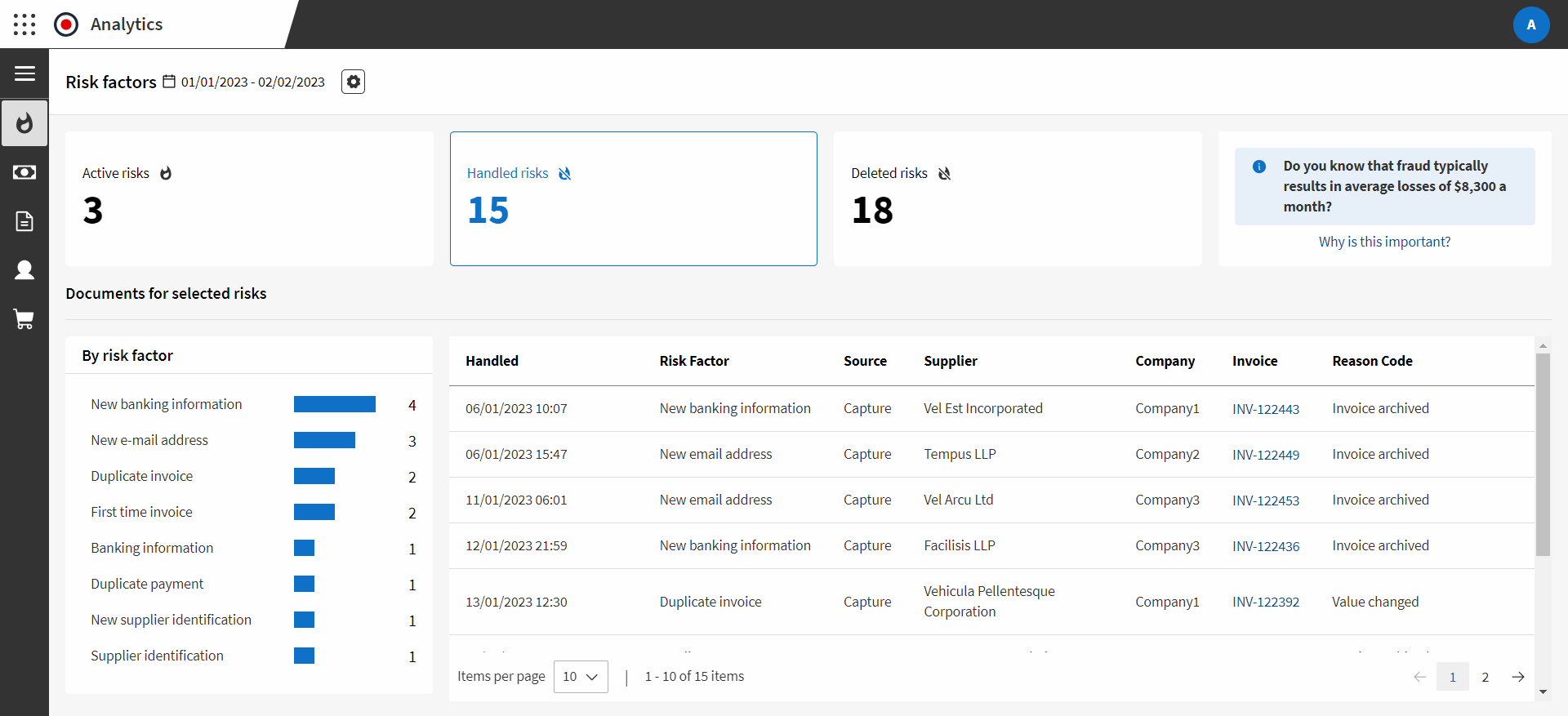
AI systems can help finance teams surface unusual invoice patterns, monitor payment anomalies, identify duplicate transactions, and support operational risk visibility across source-to-pay environments.
Medius Fraus & Risk Detection

This does not eliminate the need for financial oversight or governance controls.
Instead, AI driven fraud prevention becomes part of a broader operational framework where intelligent systems help organizations strengthen transaction monitoring while maintaining auditability and enterprise accountability.
As AI capabilities mature across source-to-pay operations, fraud detection is becoming more closely integrated into broader workflow intelligence environments rather than operating as isolated control processes.
Why AI differentiation in S2P depends on operational depth
Many AI capabilities across enterprise software focus primarily on interfaces, copilots, or conversational functionality.
Long term AI differentiation in source-to-pay environments depends far more on operational execution.
Organizations evaluating S2P platforms increasingly need to understand how AI capabilities support workflow coordination, supplier operations, payments, procurement execution, contract alignment, and transaction oversight across real enterprise environments.
This is why AP automation depth matters so significantly in broader S2P AI strategy.
Platforms grounded in operational finance workflows, structured transaction data, and enterprise execution environments are often better positioned to support more advanced AI coordination across interconnected spend operations.
The future of source-to-pay AI will be shaped by operational intelligence embedded directly into enterprise workflow execution.
How Medius is expanding AI across the source-to-pay lifecycle
The future of source-to-pay automation depends on intelligent systems that can operate across interconnected procurement and finance workflows without sacrificing operational accountability or execution consistency.
Medius is expanding beyond traditional AP automation by building more connected AI driven workflow coordination across supplier operations, procurement activity, payments, contracts, and financial processes. Rather than approaching AI as a standalone interface layer, Medius continues evolving operational intelligence directly within the workflows organizations rely on every day across enterprise source-to-pay environments.
Book a demo today to see how Medius helps organizations extend AI driven workflow intelligence across the full source-to-pay lifecycle while maintaining the structure, visibility, and operational coordination enterprise environments require.
FAQs
AI agents are expanding into supplier onboarding, payments, procurement coordination, contract management, fraud prevention, and workflow orchestration across broader source-to-pay operations.
AP automation provides structured transaction data, operational consistency, supplier visibility, and workflow coordination that help support more advanced AI execution across source-to-pay environments.
AI agents can help coordinate approvals, surface workflow bottlenecks, monitor operational activity, and improve visibility across procurement and finance operations.
Governance controls help organizations maintain financial accountability, auditability, transaction oversight, and operational consistency as AI capabilities expand across enterprise workflows.
AP automation depth matters because AP contains valuable finance and supplier signals, including invoice activity, approvals, exceptions, payment timing, supplier behavior, and ERP-connected transaction data. These operational signals can support broader AI coordination across procurement, payments, supplier workflows, contracts, and spend management, which is central to how Medius is differentiating on AI in source-to-pay.


