
AI expense management refers to the use of artificial intelligence to automate, analyze, and control employee and corporate spending in real time. It combines technologies like machine learning (ML), optical character recognition (OCR), and natural language processing (NLP) to capture receipts, categorize expenses, enforce policies, and detect anomalies across the expense lifecycle.
Unlike traditional expense management, which relies on manual submission and after-the-fact review, AI-driven systems continuously evaluate expense data as it enters the workflow. This allows finance teams to identify issues, enforce compliance, and prevent fraud before reimbursement or payment occurs.

In modern finance environments, AI expense management is not just a productivity tool. It is a critical component of broader spend control strategy, connecting employee expenses with accounts payable workflows, payment systems, and financial reporting.
Why AI expense management matters
Expense management has historically been one of the least controlled areas of finance. Submissions are delayed, policies are applied inconsistently, and approvals vary across teams. As a result, finance leaders often lack a reliable, real-time view of employee-driven spend.
This lack of visibility creates downstream risk:
- Inaccurate cash flow forecasting
- Missed policy violations and fraud
- Delayed financial close processes
- Limited ability to control discretionary spend
AI expense management addresses these gaps by introducing real-time validation, standardized workflows, and continuous monitoring.
Instead of reviewing expenses after submission, finance teams gain the ability to:
Detect anomalies as they occur
Enforce policies automatically
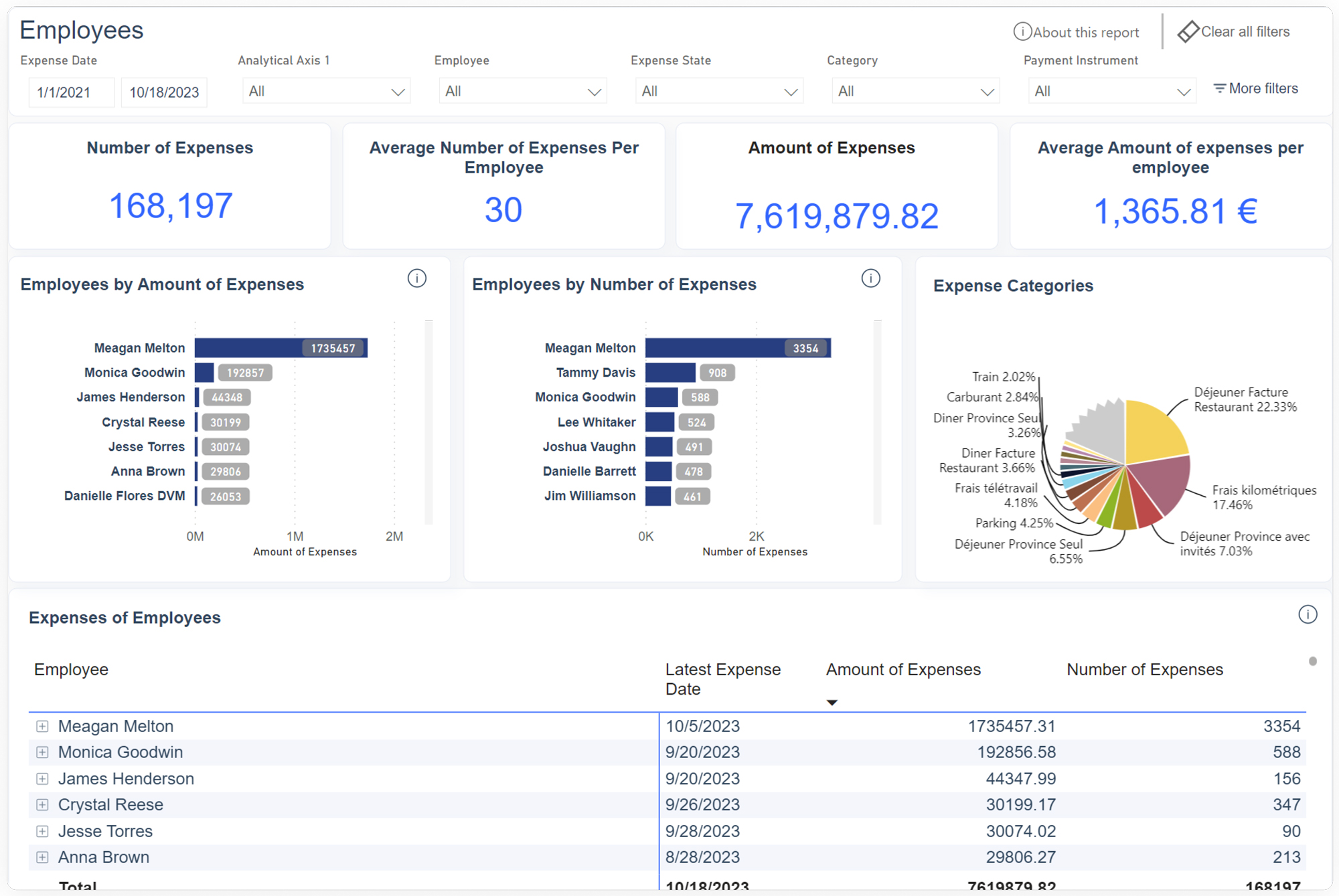
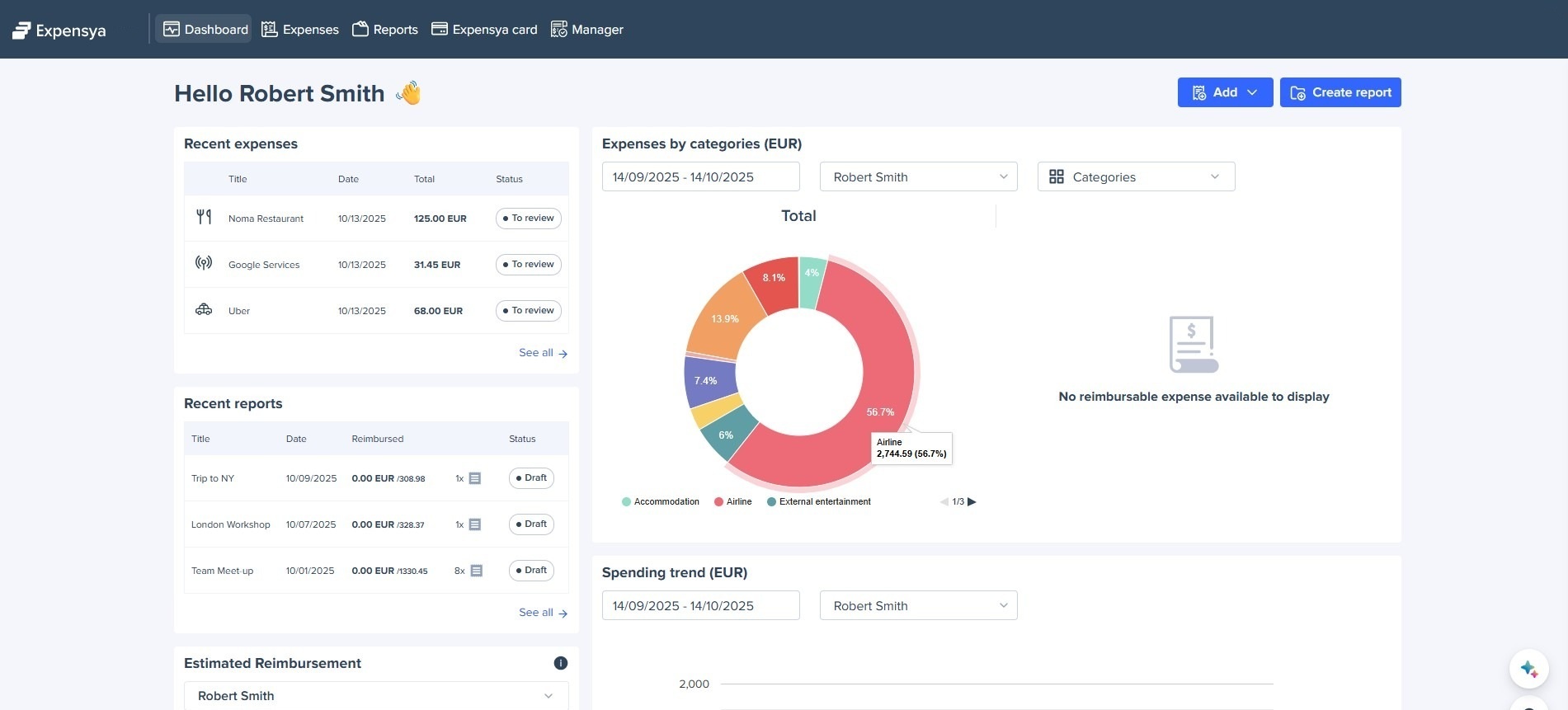
Track spend across employees, cards, and departments in real time
Align expense data with broader AP and payment processes
This shift transforms expense management from a reactive process into a proactive financial control layer.




Functionalities of AI expense management software
AI-powered expense management solutions leverage a range of AI functionalities like machine learning (ML), optical character recognition (OCR), natural language processing (NLP) and more to streamline processes, enhance accuracy and provide valuable insights into your spend data. Here are some key AI functionalities:

Adaptive learning
Machine learning models keep learning from user interactions and data patterns, adjusting to changing expense management needs, and getting smarter with time– which then categorize expenses automatically and accurately and predict future spending.

Anomaly detection
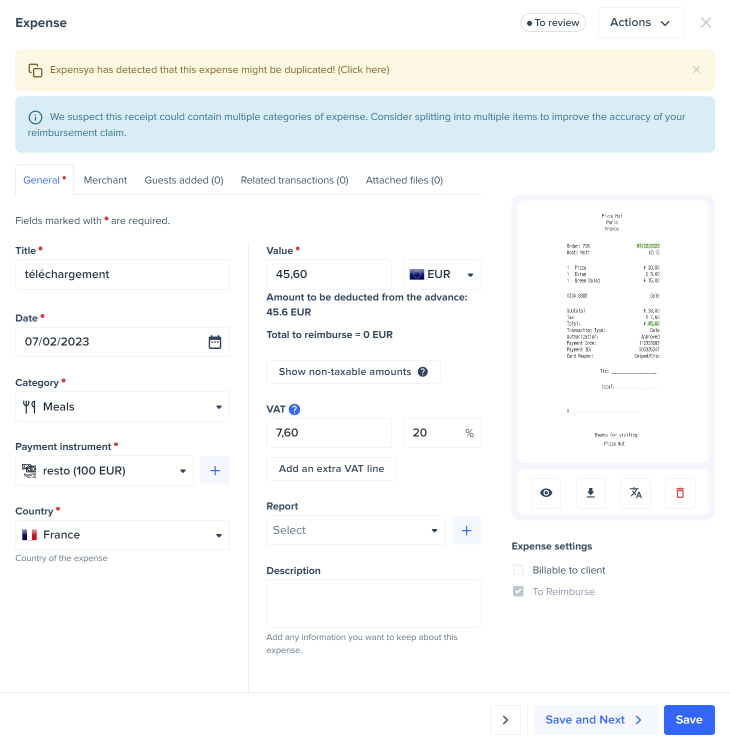
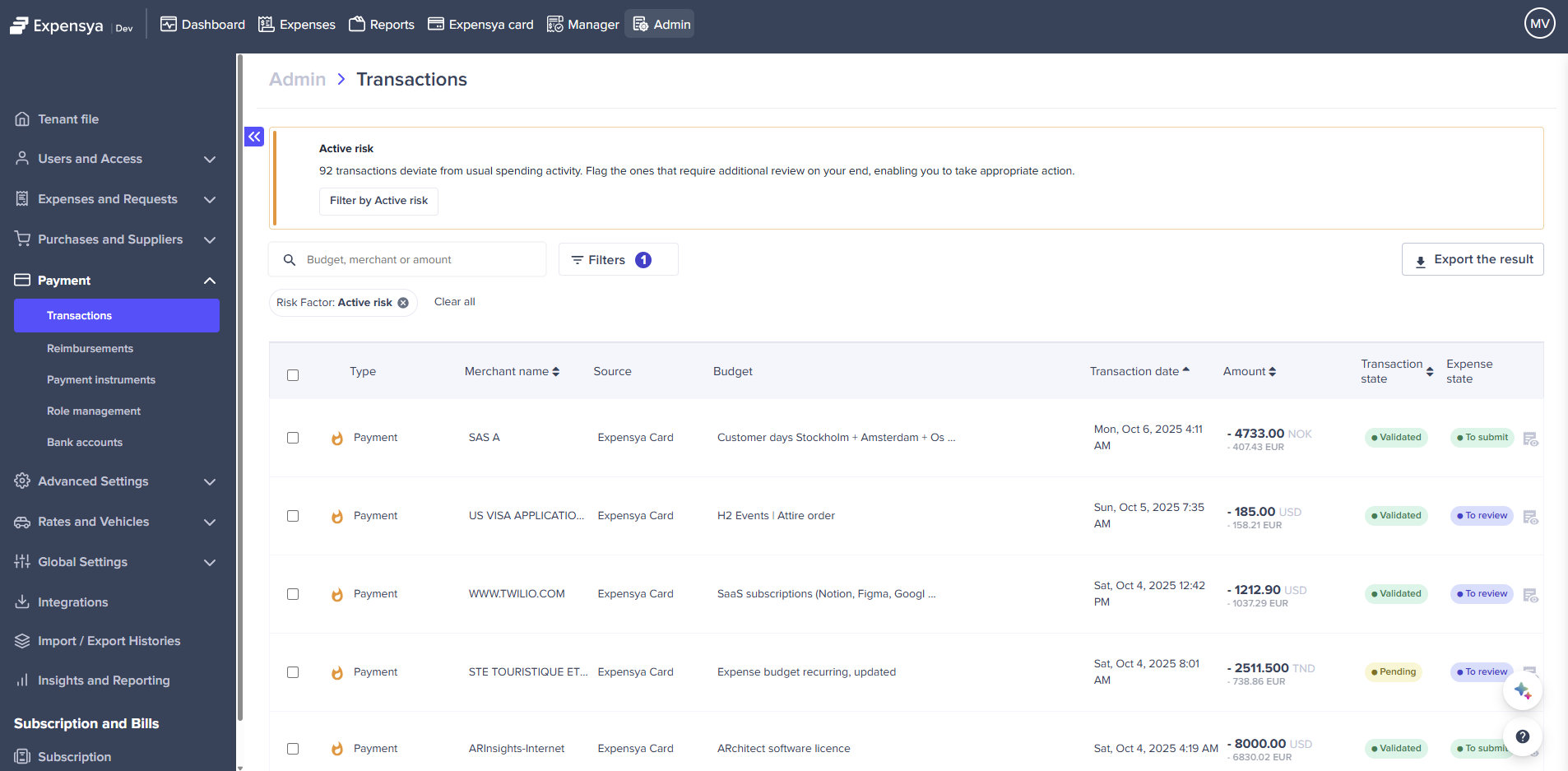
AI-powered tools can quickly spot irregularities in expense reports, catching possible employee or vendor fraud or errors that could slip through manual reviews – ultimately saving time and money.

Automated expense categorization
Machine learning algorithms automatically categorize expenses by learning from past data, cutting down on manual input from your team, and making it easier and faster to find.

Automated expense approval workflows
AI makes life easier by automating the approval process, routing expense reports based on predefined rules, or iteratively learning where to route based on changes – ensuring everyone is paid faster and more efficiently.

Cloud-based scalability
Cloud-based expense management solutions powered by AI offer scalability. They can easily handle increasing data volumes and adapt to evolving business needs – keeping up with your business as it grows.

Expense report generation
AI-powered algorithms can effortlessly put together detailed expense reports by gathering and sorting through different expense receipts, credit card transactions and mobile interactions. This can save the employee tons of time and frustration of matching and sorting.

Fraud detection
AI analyzes user behavior and spending patterns to spot suspicious activities like fake receipts or transactions. Machine learning algorithms also pick up on patterns linked to known fraud scenarios, making the system better at detecting and stopping fraudulent transactions in the future.

Integration with ERP and other systems
Automation platforms effortlessly integrate with accounting and ERP systems, creating a smooth financial ecosystem and reducing the hassle of manual data transfers.

Mobile apps and chatbots
AI-powered chatbots help users with expense-related questions, policy information, and more, improving the user experience. Mobile apps with AI features like ML and OCR let users snap receipts with their smartphones, automating the expense entry process and improving turn times.

Predictive expense analytics
AI-powered data analytics platforms crunch massive datasets to give you in-depth insights into spending patterns, trends and opportunities for cost optimization–giving you the transparency you need for future decision-making.

Policy compliance
NLP and Machine Learning make sure expenses follow company policies, automatically highlighting any issues or non-compliance. Proactive compliance prevents unnecessary costs.

Real-time expenses
AI-powered mobile apps let you track your expenses in real-time, giving you an instant view of your spending from anywhere.

Receipt and document processing
NLP extracts information from unstructured data like receipts and invoices, making data entry and categorization more efficient and easier to manage.

Receipt scanning and image recognition
OCR tech automates extracting information from scanned receipts, minimizing manual data entry and errors.
Key capabilities of AI expense management software
- Adaptive learning: Systems continuously improve based on transaction patterns and user behavior
- Predictive analytics: AI identifies future spend trends and cost-saving opportunities
- Real-time monitoring: Expenses are tracked and validated instantly across systems
- Policy automation: Rules are enforced consistently without manual intervention
- ERP integration: Seamless data flow into financial systems ensures accurate reporting
- Mobile-first experience: Employees can capture and submit expenses in real time
These capabilities allow organizations to scale expense management while maintaining control and compliance.

Benefits of AI for expense management
1
Greater efficiency through better automation
The heart of AI expense management is all about automating those boring and time-consuming tasks. From data entry to expense categorization, AI systems handle it smoothly, freeing time for you and your employees to focus on the more strategic parts of their jobs. Plus, you’ll reduce the risk of errors with manual data entry.
2
Accuracy at the highest level
Machine learning algorithms in AI expense management solutions keep learning and adapting to expense data patterns. This guarantees more precise expense categorization, minimizes errors and provides reliable financial information. As the system evolves, it gets better at spotting anomalies and discrepancies, giving you more reliable data than traditional expense processes.
3
Strategic decision-making and data-backed information
One of the perks of AI in expense management is its ability to predict future expenses using enhanced analytics. By reviewing historical data, AI systems can give insights into spending patterns, helping organizations make smarter decisions. Financial leaders expect and appreciate a team that can deliver proactive budgeting, better resource allocation and strategic financial planning.
4
Cost savings and greater optimizations
AI-powered expense management helps you identify areas of overspending and points out opportunities for cost optimization. The system can analyze spending patterns, flag unnecessary expenses, and suggest adjustments to stick to your budget. This cost-conscious approach ensures your team is watching spending and being responsive to changing financial landscapes.
5
Increased compliance
AI systems with NLP capabilities can analyze expense reports against predefined rules, highlighting any deviations from guidelines. This makes sure that all expenses align with company policies, reducing the risk of non-compliance, fraud and financial irregularities.
6
Streamlined regional or global financial operations
AI expense management is great for businesses with regional or international operations. These systems are designed to handle multiple currencies and languages, ensuring expense tracking is accurate and consistent across different regions. The adaptability of AI helps organizations smoothly navigate the complexities of the global financial landscape.
7
Improved security
AI expense management solutions prioritize security when handling sensitive financial information. With encryption, secure data storage practices, and compliance with industry regulations, a better solution will guarantee the confidentiality and integrity of financial data. Strong security measures are necessary as more organizations rely on digital platforms for financial management.
FAQs for AI expense management
AI is becoming increasingly the norm among systems and solutions that serve businesses of all sizes–and truly needed to operate at the speed required by today’s business landscape. Small businesses benefit from the efficiency and cost savings, while larger enterprises appreciate the added benefits of scalability and the ability to handle more transactions.
Usually, solutions employ encryption, secure data storage practices, and compliance with industry regulations to make sure that sensitive financial information is kept confidential and intact.
The best way to implement AI is to review AI-powered expense management solutions and choose what’s right for your business. Review features, functionality and cost to make sure they align with your company's requirements.
AI is changing at a rapid pace across all industries. AI advancements are happening daily in ML and NLP algorithms for expense management. You can expect greater accuracy of line-item capture and categorization, automated expense reports and flows, and integration between other AI-enabled business processes – like AP for greater overall efficiencies.
Explore more AI resources

Robots aren’t taking your job, just your frustrations.


What is the difference between spend management and expense management?

Breaking down AI buzzwords in accounts payable
Turning the hype into tangible, valuable AP applications